Which Wool Doesn't Itch? Merino, Cashmere, Alpaca and Sheep's Wool Compared
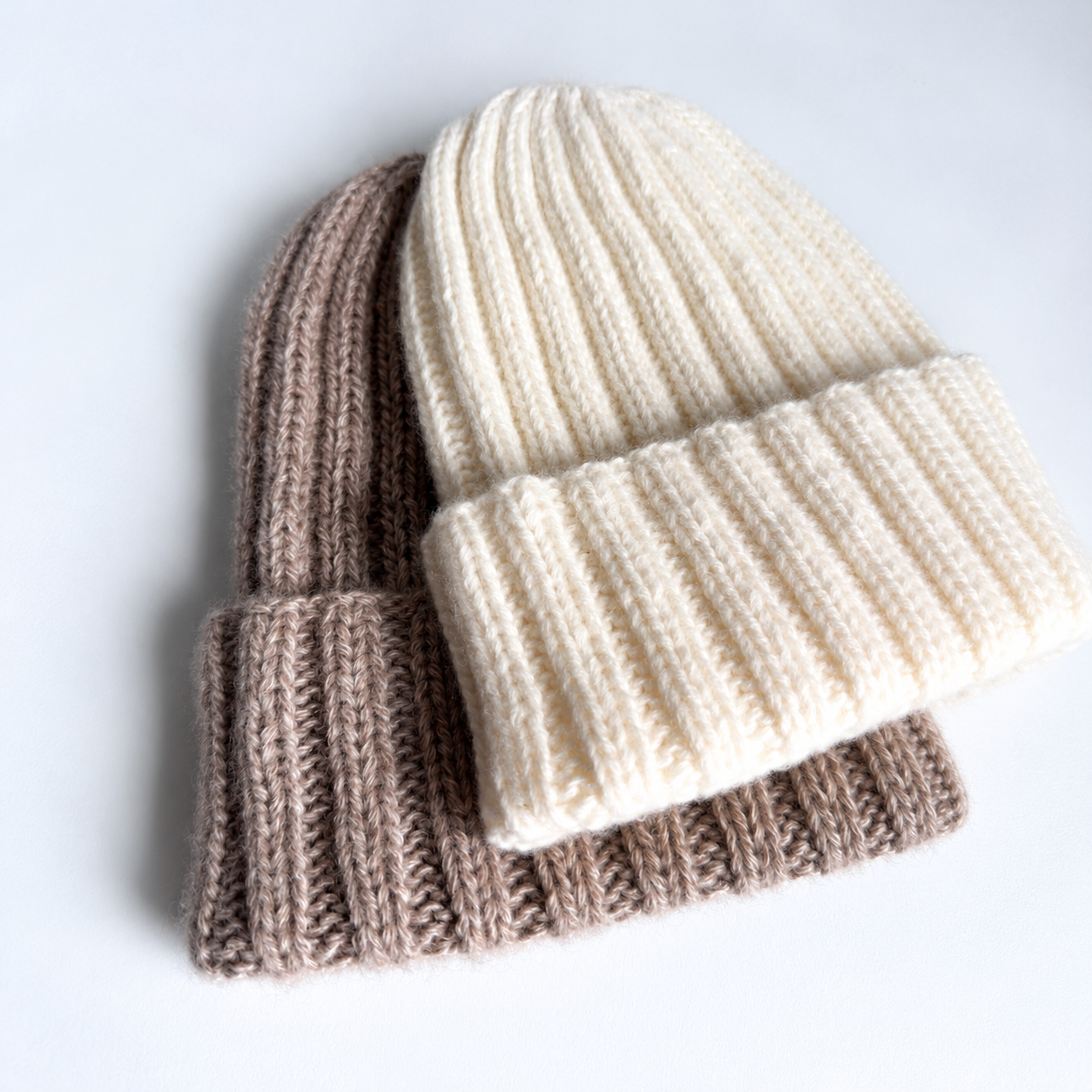
Is there such a thing as wool that doesn't itch? It's one of the questions I hear most often when someone is choosing a wool beanie, scarf or shawl. Some people can comfortably wear almost any type of wool, while others notice itching even with very soft knitwear. A lot depends on the fineness of the fibres, how the fabric is knitted and how sensitive your skin is. Let's look at the differences between merino, cashmere, alpaca and traditional sheep's wool, and what really matters when you're looking for something comfortable to wear.
Why do some wool beanies feel itchy?
If wool feels itchy, it doesn't necessarily mean it's poor quality. The sensation is usually caused by the ends of fibres pressing against the skin. When those fibres are relatively stiff, they don't bend easily on contact and can cause irritation. Fibre diameter is particularly important, although the structure of the yarn and the knitted fabric also makes a difference.
The diameter of an individual fibre is measured in microns (µm). Generally, finer fibres bend more easily, which is why fine wool tends to feel more comfortable directly against the skin. However, that doesn't mean every type of wool will feel the same to everyone. Very sensitive skin may still react to materials that other people find exceptionally soft.
Merino wool – is it really non-itchy?
Merino wool comes from Merino sheep. Its fibres are generally finer than those of many traditional types of sheep's wool, which is why it's so often used for clothing and accessories worn next to the skin. These fine fibres bend more easily when they touch the skin, reducing the familiar prickly sensation associated with coarser wool.
It's worth remembering, though, that not all merino wool is the same. Different yarns vary in fibre diameter, twist and finishing. A beanie knitted from extra-fine merino can feel noticeably different from one made with a coarser yarn, even if both are labelled 100% merino wool.
I use delicate baby merino wool for most of the beanies I make. From my own experience, I know how wonderfully soft and comfortable it feels against the skin. Customers who have previously worried about itchy wool often find this particular material very comfortable. That's why baby merino is one of my first choices when I want to make a soft beanie for everyday wear. You can see examples of this knitwear among my classic merino beanies.
Interestingly, dermatological research confirms that very fine merino fibres are well tolerated by many people, including those with sensitive, atopic skin. So there's no need to rule out natural wool simply because you've had an unpleasant experience with thicker, scratchier wool beanies in the past.
Cashmere – exceptional softness and everyday comfort
Cashmere is one of the most highly valued, and also one of the more expensive, natural fibres used in knitwear. It comes from the fine undercoat of cashmere goats. Cashmere fibres are exceptionally fine and flexible, allowing them to create knitted fabrics that feel remarkably soft, light and comfortable against the skin.
If you're concerned about a wool beanie feeling itchy, cashmere is certainly worth considering. Its softness isn't simply a matter of how the finished item feels when you touch it. It also comes from the structure of the fibres themselves, which bend easily against the skin.
At NitkoweLove, I hand-knit beanies from both 100% cashmere and cashmere blended with silk. I enjoy working with these yarns because they allow me to create delicate knitwear designed for everyday use. Cashmere isn't something you need to save for special occasions. With proper care, a cashmere beanie can be part of your wardrobe for many seasons. If you'd like to see what cashmere looks like in a finished knitted piece, take a look at my cuffed cashmere beanies.
Alpaca – soft and fluffy, but can it itch?
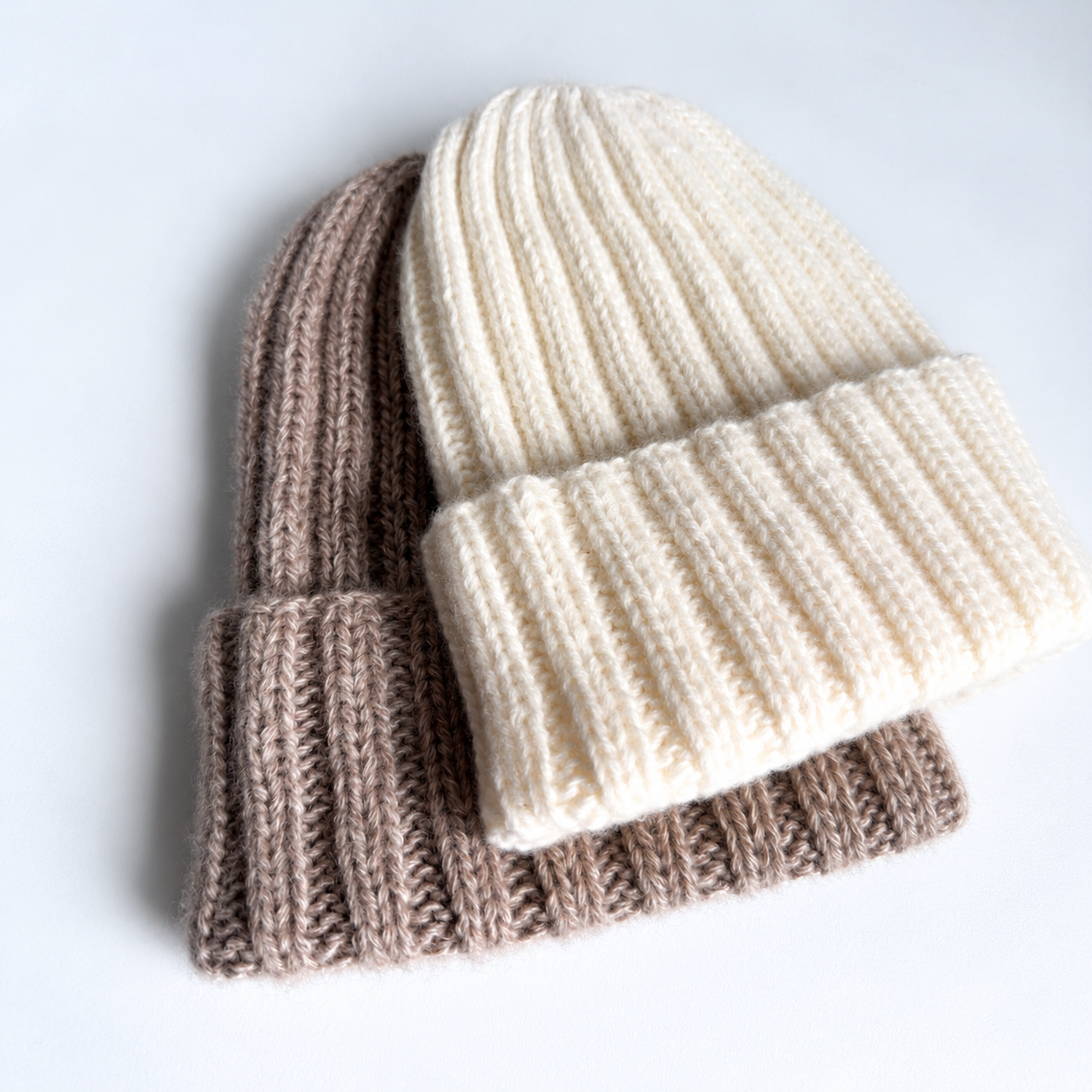
Alpaca is appreciated for its softness, light weight and the distinctive fluffy appearance it often gives knitwear. Its fibres can be extremely fine, but they aren't all the same diameter. Some yarns also contain slightly coarser, stiffer hairs, which people with sensitive skin may experience as a mild prickling or itching sensation.
This is particularly important when choosing a beanie. Alpaca can look incredibly soft but still feel uncomfortable around your forehead or ears. Even the term "baby alpaca" doesn't automatically mean that a product will be completely itch-free. It refers to a fine grade of fibre, but it can't predict how your individual skin will react.
The natural halo of alpaca fibres isn't a defect in the knitwear. It's one of the characteristics that gives alpaca its distinctive appearance. A fluffy structure can also help trap air, contributing to thermal insulation. However, if you know that even very fine hairs touching your face bother you, it's worth being cautious when choosing a fluffy alpaca beanie.
Traditional sheep's wool – is it always scratchy?
The term "sheep's wool" covers many different fibres with different properties. Merino is also sheep's wool, although product descriptions often distinguish fine merino from more traditional types of sheep's wool. The latter may contain thicker, stiffer fibres that feel more noticeable against the skin.
That doesn't mean traditional sheep's wool is inferior. It can be an excellent material for warm, durable knitwear, particularly if your skin isn't especially sensitive. For people who are used to wearing wool, its distinctive texture may be perfectly comfortable.
I use traditional sheep's wool to make beanies such as JANKA and ASHER. They have a thick, substantial knit with a distinctive chunky texture. If you like chunky beanies with a pronounced knitted structure that works well with winter clothing, these styles may appeal to you. Just bear in mind that they'll feel different against the skin from fine baby merino or cashmere.
Merino, cashmere, alpaca or sheep's wool – which is best for sensitive skin?
Different types of wool can feel very different when you wear them. If softness and avoiding that prickly sensation are your main priorities, fine-fibred materials are a good place to start. With beanies in particular, it's worth considering not only the fibre content but also the texture of the knit and your own previous experiences.
- Baby merino – a very good option for everyday wear, especially if you want a delicate knit that avoids the familiar prickly feeling of coarser wool.
- Cashmere – particularly worth considering if exceptional softness, lightness and comfort against the skin matter most to you.
- Alpaca – suitable for people who enjoy soft, fluffy knitwear and don't mind the natural fine hairs on the surface of the fabric.
- Traditional sheep's wool – a good choice for people who tolerate wool well and appreciate thicker, more textured knits.
If you're unsure how your skin reacts to wool, the best approach is to try the actual knitted fabric against the area where you'll wear it. The skin on your hands often reacts differently from your forehead, neck or ears. A brief test won't necessarily tell you how comfortable something will feel after several hours, but it can help you rule out materials that cause immediate discomfort.
Does itchy wool mean you're allergic to it?
Not necessarily. The prickling, itching or irritation you may feel when wearing a wool beanie is often caused by fibres mechanically irritating the skin rather than an allergic reaction. Research suggests that relatively coarse, stiff fibres can cause this sensation regardless of the material they come from.
It's also important to distinguish between wool feeling prickly and a genuine contact allergy to lanolin, a substance naturally found in sheep's wool. Lanolin allergy is relatively uncommon, and having such an allergy doesn't automatically mean that every woollen fabric will cause a reaction. However, if itching is accompanied by a rash, significant redness or persistent skin changes, it's worth consulting a dermatologist.
How do I choose wool for NitkoweLove beanies?
I've been knitting since childhood, and since 2016 it has been a regular part of my life. Over the years, I've worked with many different yarns and learned that the fibre content on a label doesn't tell you everything about a finished beanie. I pay attention to how the yarn behaves when knitted, how the fabric changes after washing and how it feels when worn. I wash every beanie I make before sending it to its new owner.
I personally love delicate baby merino and cashmere, but I also know that not everyone is looking for the same texture. Some customers prefer soft, fine stitches, while others enjoy the fluffiness of alpaca or the chunky texture of traditional sheep's wool. If you're choosing a beanie for yourself or as a gift for someone who has found wool uncomfortable in the past, feel free to get in touch. I'll help you compare the available materials and choose a knit that suits your needs.
Frequently asked questions
Is 100% baby merino wool itchy?
Baby merino is a very fine, soft type of wool that is generally well tolerated, even by sensitive skin. It works beautifully in the beanies I make, and customers often choose it specifically for its softness. However, the term "baby merino" alone can't predict every individual's skin reaction.
Is cashmere softer than merino wool?
Cashmere is known for its exceptional softness and fine fibres. Both high-quality cashmere and fine baby merino can feel wonderfully comfortable against the skin. The choice also depends on the particular yarn and how the fabric is knitted.
Is alpaca softer than merino?
Both materials can be very soft, but they feel different when worn. Alpaca often has a noticeable fluffy halo, whereas fine merino can create a knit with a smoother, less hairy surface. Neither fibre can be said to feel more comfortable for everyone.
Which wool is best for a beanie if you have sensitive skin?
I recommend starting with fine baby merino or cashmere. Both are often very well tolerated, and beanies made from them can feel comfortable for everyday wear. If your skin is particularly sensitive, it's still worth considering the texture of the specific knitted fabric.
Will washing make itchy wool softer?
Washing wool according to the manufacturer's care instructions can change how soft it feels and how the knitted fabric drapes. It won't change the diameter of the fibres themselves, though, so there's no guarantee that an itchy beanie will become comfortable after washing.
