Alpaca Beanie and Sensitive Skin – What Should You Know?
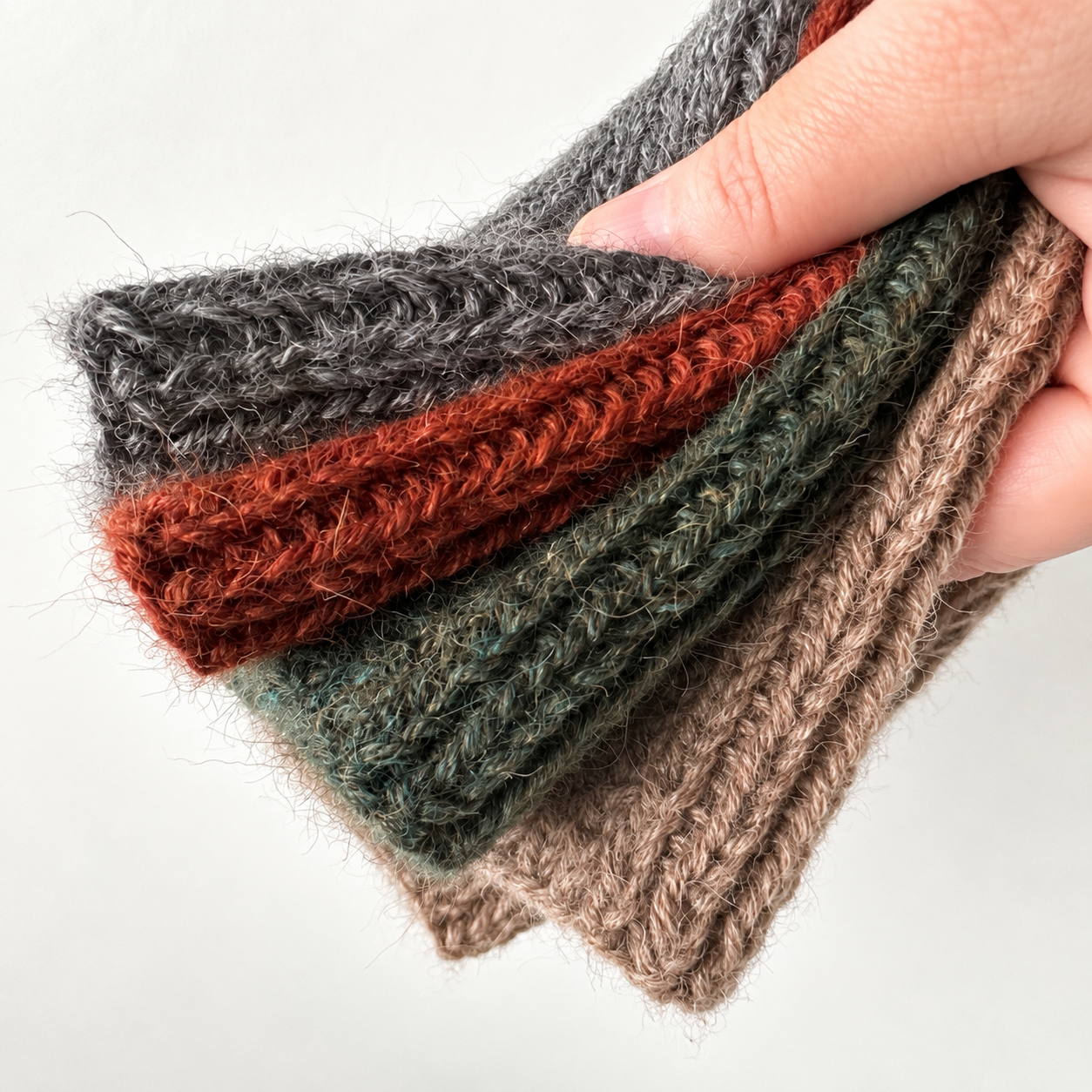
An alpaca beanie can be soft, lightweight and very comfortable to wear, but I am often asked one question: “Is alpaca itchy?”. There is no simple yes or no answer, because a lot depends on the yarn itself and on how sensitive your skin is. Alpaca has a natural fine halo, and some people notice those fibres more than others. If you are considering an alpaca hat but are worried about itching or prickling, it helps to know what really matters before you buy.
Why can alpaca feel itchy?
What we commonly describe as wool “itching” is often not an allergy. It is usually a mechanical sensation caused by fibres touching the skin. The more coarse or stiff fibres there are in a knitted fabric, the more likely they are to feel prickly or irritating.
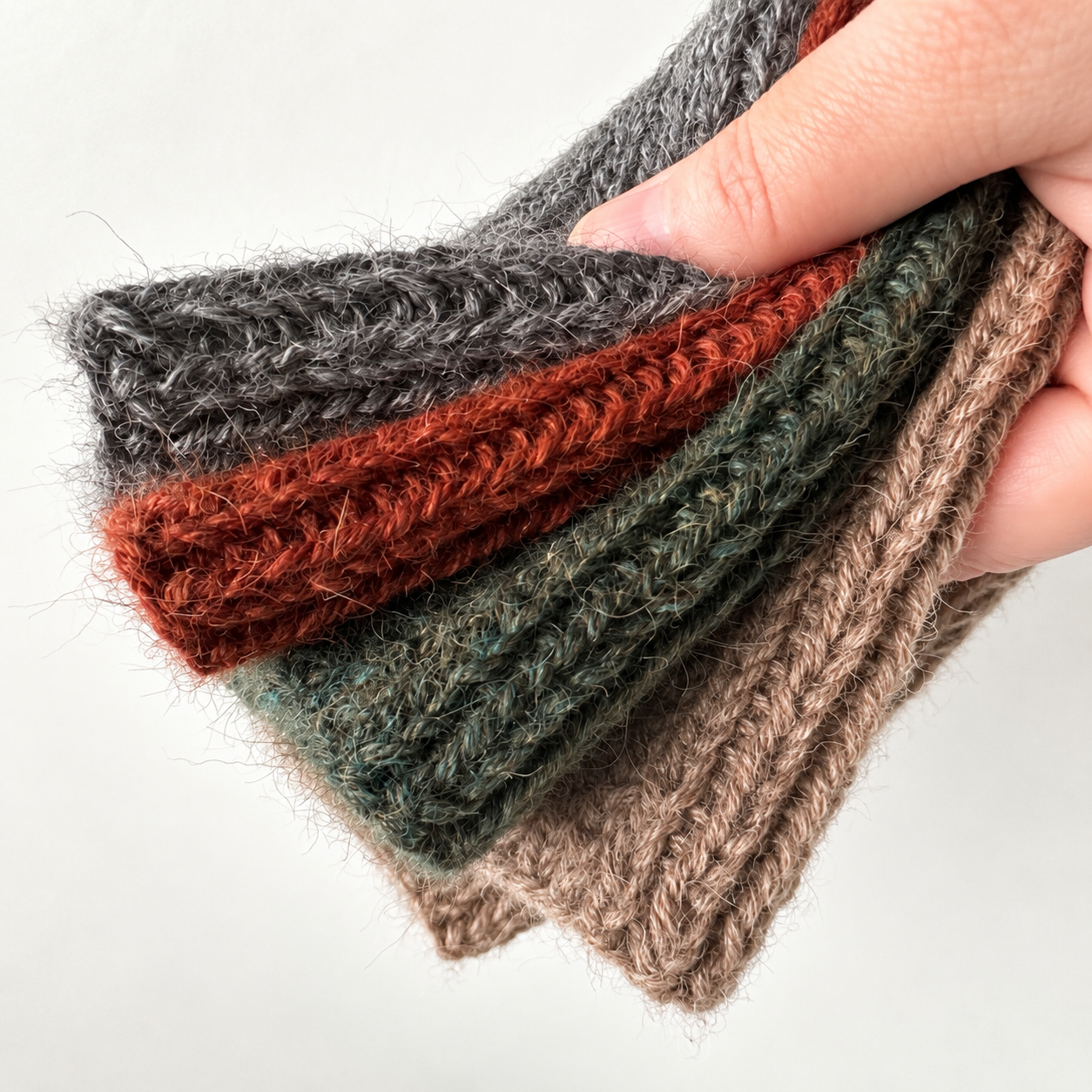
Alpaca is not a completely smooth fibre. A finished alpaca wool beanie has a fine natural halo on the surface, and people with very sensitive skin may notice it. To one person this feels pleasantly soft and fluffy; to another it may feel slightly prickly. That is why I do not promise that every alpaca beanie will be completely itch-free for everyone.
Does all alpaca feel the same?
No. Alpaca fibres can vary in fineness and uniformity, and finished yarns are not all alike either. What matters is not only the fibre listed on the label, but also its quality, how it has been prepared, the construction of the yarn and the knitted fabric itself.
For that reason, the words “100% alpaca” alone cannot tell you exactly how a hat will feel against your skin. Two alpaca hats made from different 100% alpaca yarns may feel different. When choosing an alpaca beanie, it is worth looking beyond the fibre content and paying attention to how the surface and skin contact are described.
If you would like to learn more about the fibre itself, its properties and how it is used, you can also read Alpaca – what is worth knowing about this fibre?.
Is an alpaca beanie suitable for sensitive skin?
It can be, but if your skin is very sensitive I would choose carefully. A beanie sits directly against the forehead, temples and ears. In these areas even a fine halo can be more noticeable than it would be, for example, in a loose-fitting sweater.
If you already know that fuzzy sweaters, mohair or more noticeable wool fibres bother you, I would not automatically assume that alpaca will feel completely smooth. Fine merino can be another option to consider because it generally has a smoother surface. On the other hand, people who do not mind a soft natural halo often feel very comfortable in alpaca hats.
How to choose an alpaca beanie before buying
Start with what you expect from your hat and how your skin reacts to different fibres. If you value natural fibres, a lightweight knitted fabric and the characteristic softly fuzzy surface of alpaca, it can be a very good choice. If your priority is the smoothest possible feeling against the skin, it is worth comparing alpaca with merino as well.
At NitkoweLove I also describe how the knitted fabric of each hat may feel against the skin. With alpaca models, I say openly that the fine halo may feel slightly prickly to people with very sensitive skin. If you would like to see the available colours and shapes, you can browse alpaca beanies without a folded cuff. This makes it easier to choose not only the fibre but also the shape and fit of the hat.
100% alpaca or an alpaca blend?
Not every alpaca hat has to be made entirely from alpaca. In blended yarns, alpaca may be combined with wool, merino, mohair or other fibres. Changing the fibre composition affects the structure of the yarn, its elasticity and the way the finished knitted fabric behaves, but a blend does not automatically mean that a beanie will feel more or less itchy.
That is why it is better to look at the specific yarn and product description rather than only at the percentage of alpaca on the label. If your skin is particularly sensitive, it is worth mentioning this before buying. It then becomes easier to choose a fibre that has a better chance of feeling comfortable for you.
Alpaca and allergies – itching is not the same thing
It is useful to separate two different issues. Prickling or itching is most often a mechanical response to fibres protruding from the knitted surface. An allergic reaction has a different cause, so the terms “non-itchy” and “hypoallergenic” should not be used as if they mean the same thing.
Alpaca fibre contains very little lanolin compared with sheep's wool, but this does not guarantee that no one will ever react to it. If you have a diagnosed allergy or your skin reacts strongly to particular materials, your own experience and medical advice are more useful than relying only on the name of the fibre.
Frequently asked questions
Is alpaca itchy?
It can feel slightly prickly, particularly to people with very sensitive skin. This depends partly on the fineness and uniformity of the fibres and on the particular yarn used to make the beanie.
Is a 100% alpaca beanie non-itchy?
There is no way to guarantee that. “100% alpaca” tells you the fibre content, but it does not tell you exactly how one person will experience the natural halo against their skin.
Which is better for very sensitive skin – alpaca or merino?
If you notice fine hairs and prickling very easily, merino may be a useful alternative to consider. That does not mean that everyone with sensitive skin finds alpaca uncomfortable – the sensation is individual.
Does itching from alpaca mean I am allergic?
No. Mild prickling or itching can simply come from mechanical contact between the fibres and your skin. An allergy is a different type of reaction and should be assessed separately.
Is an alpaca beanie suitable for winter?
Yes. Alpaca works well for autumn and winter accessories. How warm a particular hat feels depends not only on the fibre but also on the yarn weight, stitch pattern and overall construction of the knitted fabric.
